271,084 t
e-waste (WEEE) collected in the Netherlands in 2025, a record, but still about 72% against an 85% target.1
Fontys Eindhoven · student startup · problem validation
The law says batteries must come out, but hands can't find what they can't see.
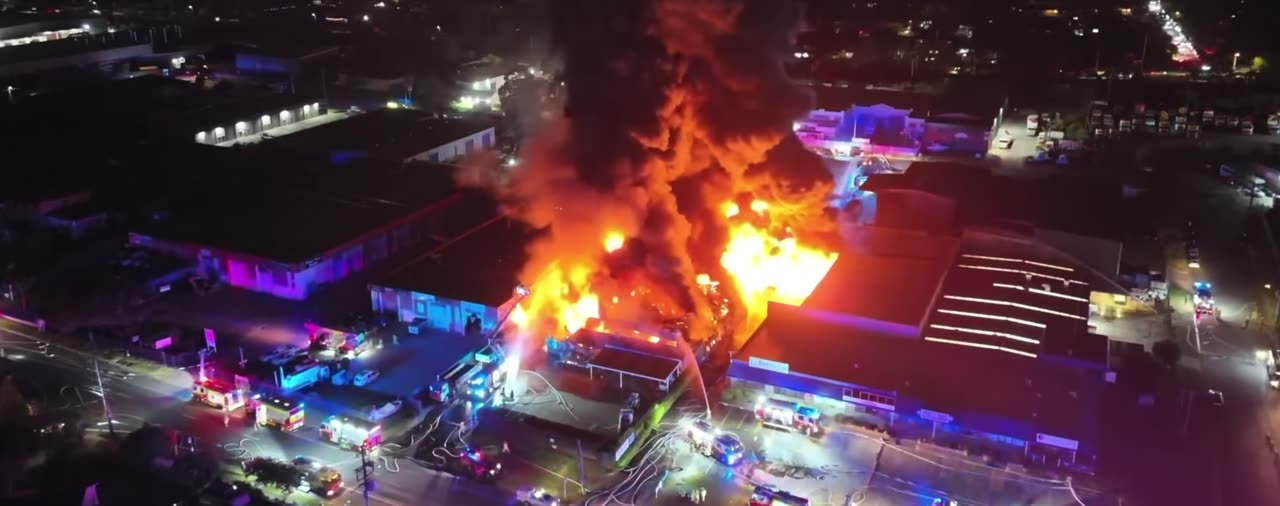
Waste facility fire, NSW, Australia. Footage: Fire and Rescue NSW via Storyful.
01 — The problem
Recyclers are told to take every battery out before the shredder. Many cells are glued deep inside devices. These are the numbers we found, with their sources.
e-waste (WEEE) collected in the Netherlands in 2025, a record, but still about 72% against an 85% target.1
batteries ended up in Dutch household residual waste in 2025. About 26 million of them were inside appliances.2
of lithium-ion batteries are built into the device, according to a recycling industry manager. Industry estimate.3
battery fires in German waste plants and collection trucks, as reported by the German waste industry associations. Industry estimate.4
of 109 surveyed European WEEE plants reported battery fires in 2018. Self-reported industry survey.5
material damage from fires at French collection, sorting and recycling sites, "up to" per year. One fire every two weeks; over 60% linked to lithium batteries and gas cylinders. Industry estimate.13
yearly cost of major insurance claims (>€2M each) in the French waste sector, up from €19M in 2019. All causes; the Senate links the rise to lithium batteries. France Assureurs data.14
estimated UK cost of battery-related waste fires in 2023, up from £158M in 2021. Industry-commissioned estimate (ESA / Eunomia).15
New sorting line destroyed months after opening. Fire started by a lithium battery; damage estimate reported by the press during legal dispute.16
600 t of packaging waste burned for four days. Cause confirmed: a lithium-ion battery damaged in a shredder.17
Sorting plant and hall a total loss; sorting suspended into 2026. Operator suspects misdisposed batteries (not yet confirmed).18
Bulky-waste hall burned out at night. Likely cause: the battery of a toy RC car. Rough estimate.19
02 — Scroll story
Follow one small appliance with a lithium cell glued inside it.
Phones, vapes, toothbrushes and toys sit at home for years. In Germany alone there are more than 300 million unused phones, tablets and laptops in homes.6
Some devices reach a shop return box or the municipal drop-off site. Others go into the residual bag. In 2025 the Dutch residual waste held about 28 loose batteries per tonne.2
The packer in a collection truck squeezes each load. A crushed cell can go into thermal runaway. The Dutch waste sector reports a truck fire "at least three times a month". Industry estimate.7
The shredder tears devices apart and punctures every cell it meets. EuRIC puts the cost of a battery fire at about €190k for a smaller event and €1.3m for a severe one. Industry estimate.9
03 — Why now
The WEEE Directive (Annex VII) requires batteries to be removed from separately collected e-waste.8
EU Battery Regulation 2023/1542, Art. 11: portable batteries in products must be readily removable and replaceable by the end user, with some exceptions.10
Portable batteries: 63% collected by end 2027, 73% by end 2030.11
Devices already in homes were built before these rules, and Art. 11 has exceptions. Our team's view (not a measured fact): hidden cells will keep reaching recyclers for years.
Quick game — Guess the fires
Reported fires at German waste & recycling plants, one year at a time. Make a guess, and we show you the real number.
| Year | Your guess | Reported |
|---|
2.8× in 4 years.
From 729 fires in 2021 to 2,028 in 2025. Most probable cause: lithium-ion batteries hidden in the waste.
Source: INFA/u&i/Prognos for ASA, BDE, bvse, CMA, VKU (Oct 2026), survey of 181 German plants; all-cause fires, Li-ion >90% of probable causes in 2025.
05 — Mission
We are six students at Fontys University of Applied Sciences in Eindhoven. We have not chosen a solution. Right now we are testing the problem: where batteries slip through, and what the people at intake and sorting actually need. If you work in waste, recycling, insurance or fire safety, we would like to learn from you.
06 — Stay updated
Tell us how batteries show up at your site, or leave your email to hear what we learn.